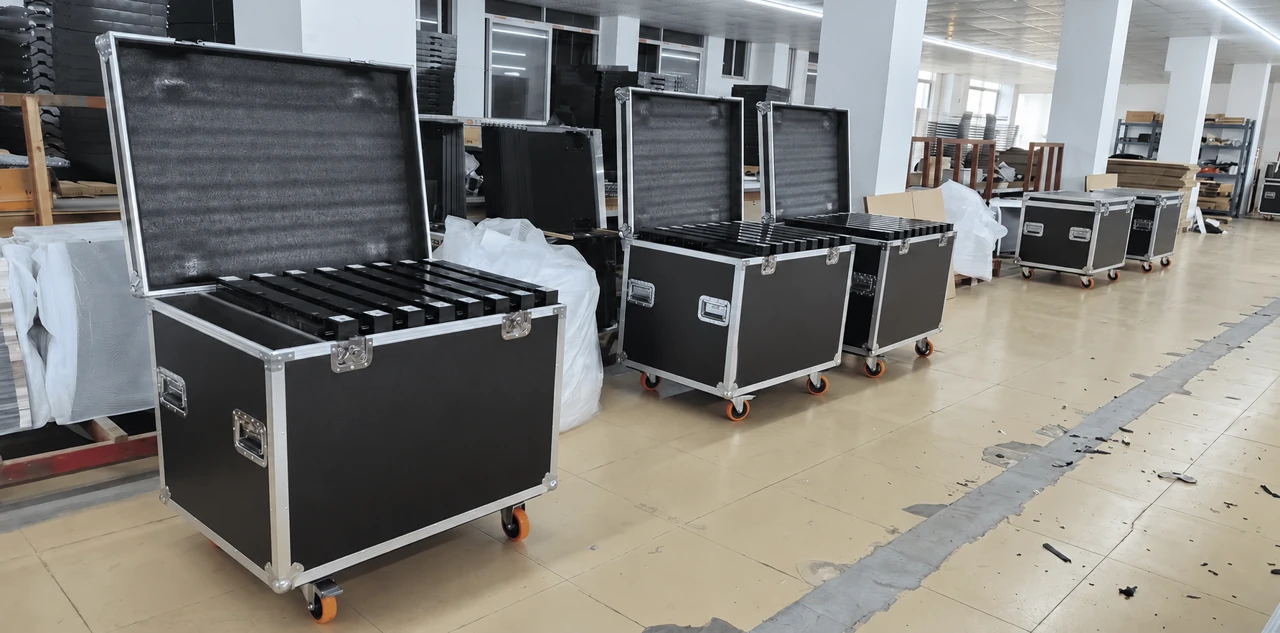
For an imported LED dance floor, agree a packing list before dispatch, record the condition of each package at delivery, and match the contents to the approved order before the first operational check. If anything is damaged, missing or inconsistent, keep it separate, preserve the packaging and record the evidence while the shipment can still be identified.
This guide is a receiving workflow for B2B buyers of lighting dance floors: rental companies, distributors and venues. It does not replace the supplied operating instructions or the carrier's reporting procedure. Its purpose is to connect the purchased configuration, shipment paperwork and receiving record so that a question about one panel does not become a search through an entire shipment.
1. Agree what will arrive before it leaves
Ask for a final equipment list and a package-by-package packing allocation. The approved quotation should already identify the floor version, quantity, connection arrangement and control package. Use our quotation comparison checklist if those details are still spread across different offers. The dispatch documents should refer to the final agreed configuration, rather than an earlier proposal.
Give every package a usable identifier, such as Case 01 of 08, and request a contents list against that identifier. The numbering example is a suggested recording method, not a standard case capacity. Keep working panels, control items, edge pieces and spares distinguishable. If accessories are placed inside a panel case, make that location visible on the list.
| Information to request | Why the receiving team needs it |
|---|---|
| Order reference and final configuration revision | Connects the shipment to the approved equipment list |
| Package identifier and packing type | Lets the team count and locate individual packages |
| Contents and quantities per package | Separates missing goods from accessories packed elsewhere |
| External dimensions and gross weight per package | Supports access, storage and unloading planning |
| Panel and accessory identifiers where provided | Links inspection findings to the correct component |
| Dispatch photos and applicable handling instructions | Provides a comparison with the package condition at arrival |
| Carrier reference and agreed reporting contacts | Gives the receiver a clear route for shipment exceptions |
2. Choose packing for the quoted system
Do not estimate shipment volume from the assembled floor area. Cases, protective material and accessories all affect the shipment. Ask for the actual packing proposal, dimensions and gross weights before confirming transport or unloading arrangements. A freight estimate based on an early panel quantity should be checked again if the final configuration changes.
DanceFloorLED's 3D Abyss product information lists flight-case packing. The star, Pixel and frosted product pages list flight-case or carton options. The final choice, case count and packing arrangement need confirmation for the order. A packing style alone does not establish a tested stacking limit, lifting method or protection against every transport condition.
Tell the supplier and freight provider whether the receiving location has a loading dock, a restricted doorway or limited storage access. Ask them to confirm the handling arrangement using the actual package information. Do not schedule manual handling on the assumption that a package is light enough or that its wheels and handles suit every part of the delivery route.
If the order includes rechargeable equipment, disclose the actual configuration to the freight provider before booking and ask which shipment documentation and handling conditions apply. Do not treat a battery option on a product page as approval for a particular transport service.
3. Prepare one receiving folder and one responsible person
Before arrival, place the approved order, packing list, carrier reference and supplier contacts in one shared receiving folder. Nominate a person to record exceptions and keep the original evidence. The team unloading the shipment should know where to send observations, rather than relying on several informal messages sent to different sales contacts.
Confirm access and a suitable place for unpacking in advance. Leave time between delivery and the first booked event for checking the shipment and resolving questions. That window depends on the order and your operation; no universal number of hours guarantees readiness. Keep the receiving process separate from the venue installation schedule.
4. Record the outside condition before unpacking
Compare the number of delivered packages with the available delivery documents. Photograph the package identifiers and the overall condition while the shipment is still together. Where an issue is visible, capture both the affected area and a wider image showing which package it belongs to. Record what you can actually observe: a crushed corner, torn carton, wet surface or missing package.
Follow the carrier's delivery and exception-reporting procedure. Where it provides for delivery-receipt notations, describe the observed issue clearly and keep a copy. Do not assume that one receipt comment is a complete claim or that every carrier has the same deadline. Ask the contracted freight provider and, where applicable, insurer which notification and claim steps apply to this shipment.
Maersk's cargo guidance, for example, advises prompt notification of cargo damage or loss. Its ground-freight guidance distinguishes an initial damage report from a formal claim. These are examples of a carrier's process, not the terms of every shipment or a promise that a claim will be accepted.
5. Unpack against the allocation, one package at a time
Open packages in an organised sequence and retain the contents list with the matching identifier. Count the panels and accessories before moving them to separate storage areas. Photograph how an affected item was packed before removing or rearranging its protective material. Keep packaging and damaged items available while the supplier, carrier or insurer advises what evidence they need.
Use separate columns for received, visually checked and awaiting clarification. A received item is not automatically ready for service. Likewise, an accessory that is absent from the first opened case may be in another identified package. Check the allocation before reporting an unexplained shortage, and record a confirmed discrepancy against the relevant line on the approved list.
Where damage, moisture, an exposed conductor or another electrical concern is visible, do not energise the affected equipment. Isolate it from the items awaiting normal checks and contact the supplier for instructions. Avoid opening sealed components or attempting repairs merely to establish a receiving count. Keep any qualified inspection and repair decision separate from the delivery record.
6. Carry out the first check using the supplied instructions
Once the goods have been matched and their condition reviewed, arrange a controlled first operational check with an appropriately competent person. Confirm the delivered power and control arrangement against the order and the supplied documentation. Connection options are configuration-specific: a magnetic connector does not establish that a panel has battery power, and a controller from another floor should not be assumed compatible.
Follow the supplier's instructions for connection, power and testing. Record the components used, the selected control method and the observed result. A short photo or video can show a reported symptom, but it should be associated with the package or component identifier and a description. Do not substitute an uncontrolled event demonstration for an agreed receiving check.
For the next stage, use our installation and setup guide. Recurring service questions belong in the maintenance guide. This receiving checklist ends with a documented handover, rather than trying to diagnose every possible fault or approve a venue's electrical installation.
7. Copy this receiving and discrepancy record
Order / shipment reference: [reference]
Receiving location and date: [location, date, time]
Receiver and contact: [name, role]
Delivery package count: [expected / received]
Package ID: [case or carton identifier]
Equipment / accessory line: [description and quantity]
Condition observed: [specific visible finding, or no issue observed]
Photos / video filenames: [include package and item identifiers]
Delivery document notation: [reference, if applicable]
Item status: [received / checked / isolated / awaiting guidance]
Supplier / carrier notified: [contact, date, reference]
Next action and responsible person: [action, owner]
Resolution and handover date: [complete when confirmed]
Keep the record factual. For instance, distinguish a missing package from a missing item inside an opened package, and distinguish transport damage from a functional symptom whose cause is not yet known. Share copies of the relevant order line, packing allocation and evidence with the responsible contact, rather than sending an unexplained close-up photograph.
8. Close the receiving record before releasing the floor
Reconcile open questions with the supplier and keep the written response beside the original observation. Identify which equipment has completed the agreed checks and which remains isolated or pending. Hand the inventory and operating documentation to the person responsible for the fleet or venue, including the location of compatible spare parts.
When requesting a DanceFloorLED quotation, use our contact form or sales@primedancefloor.com to ask for a configuration-specific packing proposal and document list. Agreeing the receiving information before dispatch makes the delivery easier to check and gives both teams a clearer basis for resolving discrepancies.
Questions about this guide
01How do I estimate the shipment size of an LED dance floor?
Request the actual package count, external dimensions and gross weights for the quoted configuration. Assembled floor area alone does not establish shipment volume or handling requirements.
02What should I record if a package arrives damaged?
Record the shipment reference, package identifier, observed condition, relevant photos and any delivery notation. Keep packaging and contact the contracted carrier and supplier promptly using their applicable procedure.
03Should I power up a visibly damaged panel to test it?
Do not energise equipment with visible damage, moisture or electrical concerns. Isolate it and obtain supplier guidance; use the supplied instructions and an appropriately competent person for subsequent checks.