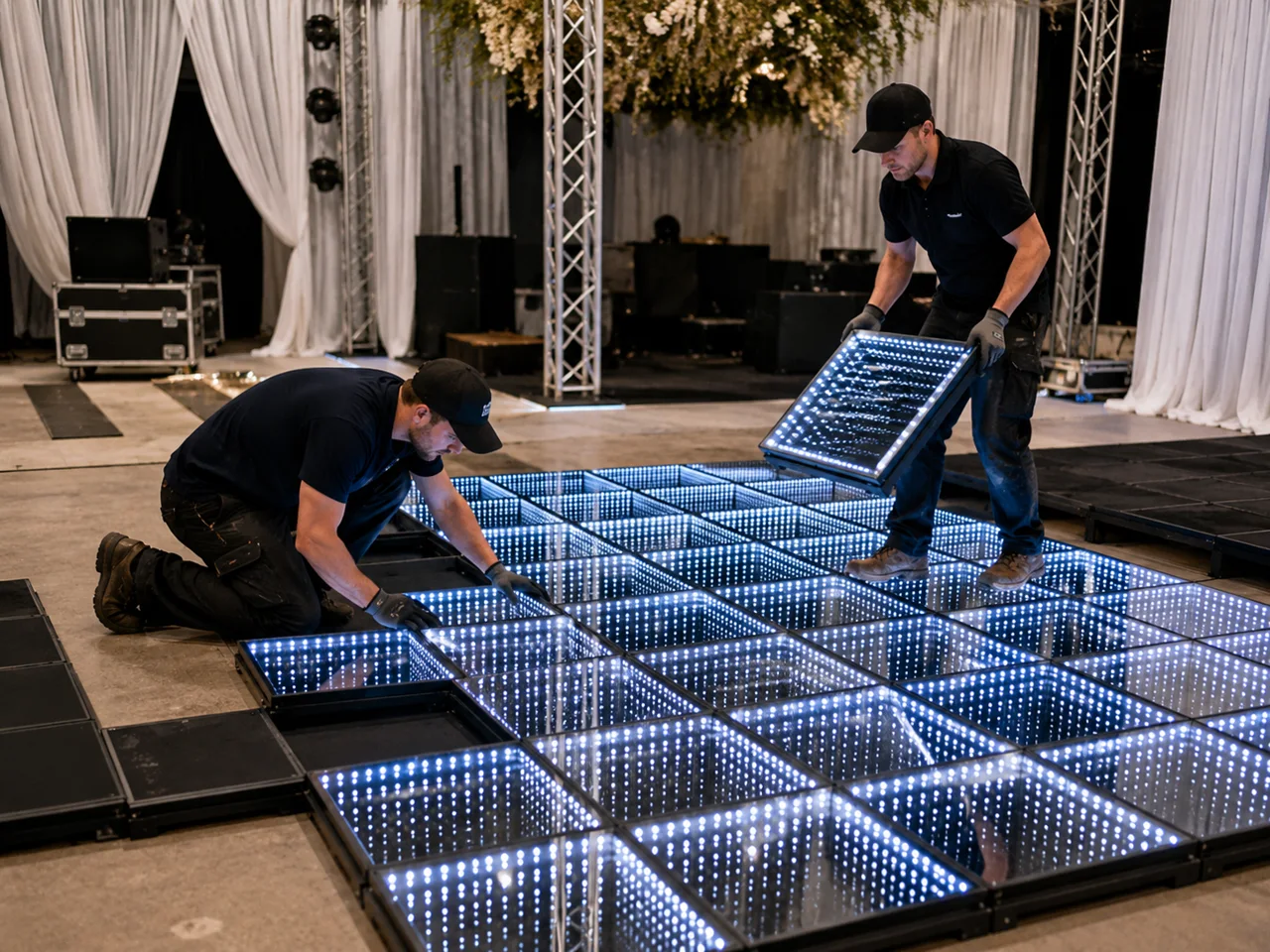
Rental Rates, Costs, and Payback
The 3D abyss LED dance floor ROI question is the one every rental operator asks before writing a check: how fast does this floor pay for itself, and what does it earn after that? The short answer, based on industry listings, is that a quality floor breaks even in roughly 6-10 jobs and then keeps earning for the better part of a decade. This guide breaks down the rental rates you can charge, the costs that come out of each job, and a transparent payback model you can adjust to your own market.
Fact: DanceFloorLED has 13 years of LED dance floor manufacturing experience and has delivered over 100,000 sets with a 98%+ on-time delivery rate.
What "Good ROI" Looks Like for a Dance Floor
For an event rental asset, good ROI is not about a percentage on a spreadsheet. It is about two things: how many jobs it takes to recover the purchase price, and how many years of profit remain after that.
Model payback from realistic bookings and the full maintenance, labour, transport and ownership costs. The conflicting Abyss lifespan statements do not establish a ten-year operating period or make later years pure margin.
The 3D abyss LED dance floor guide covers the product itself; this article is about the numbers.
What You Can Charge: Rental Rates in 2026
Rental rates vary by market, floor size, and the level of the event. Here are industry listings from 2025-2026, presented as estimates rather than fixed prices:
Cost figures in this section are planning examples from the article’s publication date.
Floor size | Typical rental rate (industry estimate) |
|---|---|
8x8 ft | $ 655 |
12x12 ft | $ 1,200 |
16x16 ft | $ 1,600-$ 5,000 |
20x20 ft | $ 2,000 |
Premium 16x16+ (high-end) | up to $ 8,000-$ 10,000 |
Per square foot (with setup) | about $ 25 |
Smaller floors for private parties run $ 300-$ 1,500, while a 16x16 ft premium LED dance floor commonly rents for $ 2,500-$ 5,000 per event in competitive markets. The spread is wide because the rate tracks the event's budget, not just the square footage.
The key takeaway: the 3D abyss effect sits at the top of this range. It is the floor that justifies the $ 2,500-plus quote because the depth effect is what the client is actually paying to show off. For how it compares to a standard star floor, see the 3D abyss vs star comparison.
What It Costs to Buy and Run
The purchase side is the bigger number, and it is worth separating into two buckets.
The floor itself is the main cost. Industry sources put budget floors around $ 3,000 and higher-quality floors around $ 6,000-$ 8,000, with premium and larger configurations running higher. These are market estimates, not a price list, so treat them as a starting point for your own quote.
Use the electrical schedule for the selected panel, controller and power-supply configuration to plan demand. The 3D Abyss FAQ lists a 20 W rated-power figure without stating whether it is per panel or per system, so it cannot be multiplied by the panel count. Confirm the configured maximum and average demand before sizing distribution.
The Abyss source does not establish a per-panel 20 W figure or a single service-life value. Request the electrical schedule for the ordered configuration and keep LED-source data separate from warranty and whole-product life.
The Payback Math: Breakeven in 6-10 Events
Here is a transparent worked example. The numbers are assumptions you should replace with your own.
Assume a 16x16 ft 3D abyss floor with a purchase cost around $ 6,000. Assume a rental rate of $ 1,600 per event, which is the lower end of the 16x16 range, and a direct cost of about $ 300 per event for a two-person setup, transport, and power.
That leaves roughly $ 1,300 net per event. At that rate, the floor pays for itself in about 5 events. Add storage, insurance, marketing, and a slow month or two, and the realistic breakeven lands in the 6-10 job range that most operators report.
Once breakeven is reached, every subsequent event is margin minus labor. A floor that books 30 events a year and nets $ 1,300 each clears roughly $ 39,000 before overhead in its first profitable years, on an asset that keeps working for close to a decade.
Why the 3D Abyss Commands a Premium
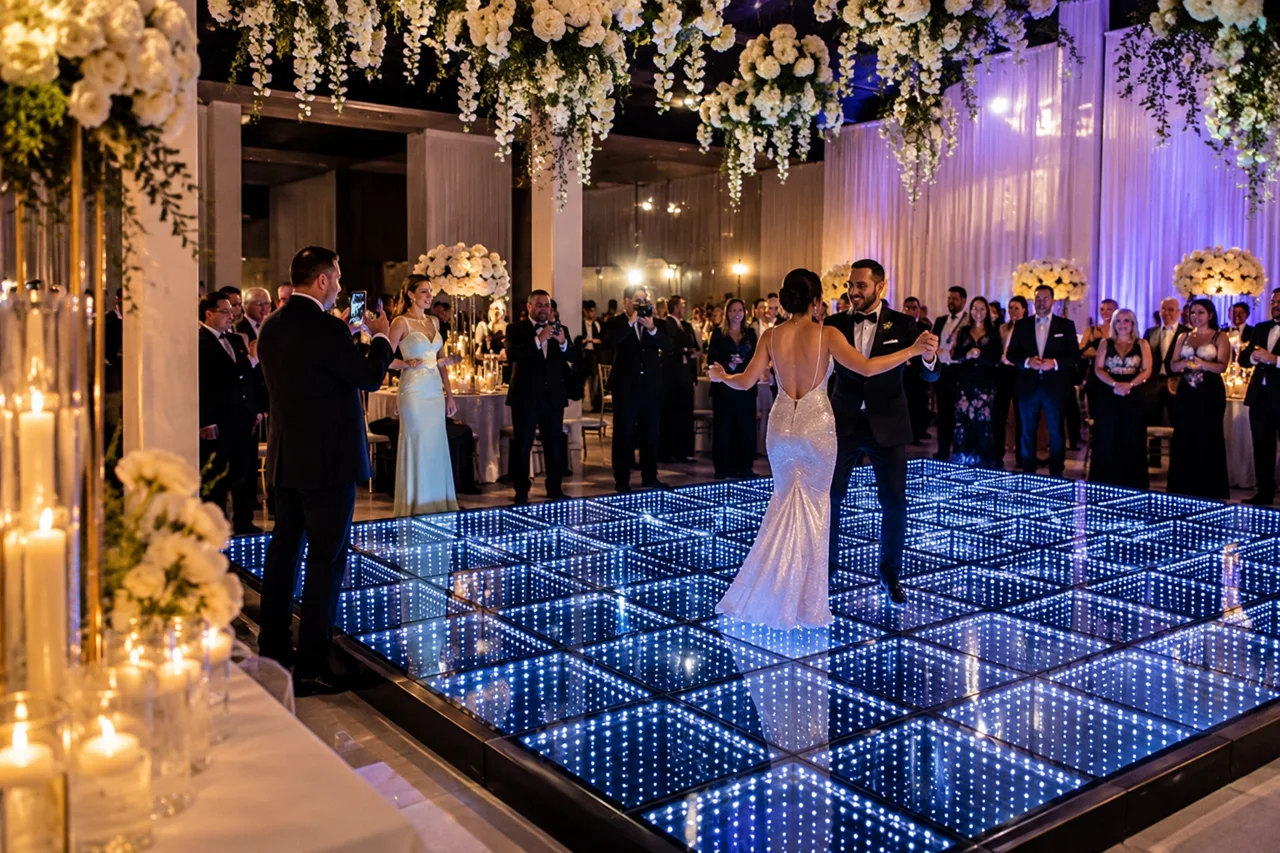
The ROI case for the 3D abyss specifically comes down to rate, not volume. The depth effect is a premium visual that photographs well and becomes the centerpiece of a high-end wedding or club launch, which is exactly the kind of job where the client is less price-sensitive.
That means the abyss recovers its cost through higher rates rather than more jobs. A generic floor needs volume; the abyss needs a smaller number of better-paying bookings. For a fleet, the two strategies complement each other, which is the argument made in the abyss vs star comparison: run the star for volume and the abyss for premium rate.
The Hidden Revenue Levers
The floor itself is only part of the revenue. The bookings around it are where the margin grows.
Corporate launches, lighting packages and custom colour themes can add booking options. Assess any outdoor request against the product FAQ and complete installation requirements; battery power and a panel IP rating do not permit operation in rain.
The floor is the anchor; the upsells are what push the effective rate per event well past the base rental figure.
Costs That Eat Margin
Four costs quietly reduce the per-job profit, and it is worth pricing them in up front.
Budget delivery and setup labour, transport, storage, insurance and maintenance separately. Measure setup for the chosen layout; a panel load figure and panel IP rating do not establish maintenance costs or rate the connections and power equipment.
The pattern is simple: the floor's energy draw and maintenance are negligible, and the two costs that matter, labor and transport, are exactly the ones the magnetic snap system is designed to shrink.
A Realistic Payback Timeline
The timeline below shows two scenarios on the same floor. The assumptions are labeled so you can substitute your own rates and booking volume.
Scenario | Bookings / year | Net / event (assumed) | Time to breakeven (on a $ 6,000 floor) |
|---|---|---|---|
Conservative | 12 | $ 1,000 | ~6 months |
Active | 30 | $ 1,300 | ~2 months |
Premium-heavy | 20 | $ 2,000 | ~6 weeks |
These are illustrative, not guarantees. The consistent finding across operators, however, is the same: the floor pays for itself within the first year of real bookings, and everything after that is profit on an asset rated for about a decade of use.
FAQ
What is the ROI of a 3D abyss LED dance floor?
A 3D abyss LED dance floor typically breaks even in roughly 6-10 rental jobs. Industry listings put high-quality LED dance floor purchase costs around $ 6,000-$ 8,000 and 16 × 16 ft rental rates around $ 1,600-$ 5,000 per event, so each booking recovers a meaningful share of the purchase price. Payback must use your actual bookings and ownership costs, without assuming a fixed operating life from the conflicting Abyss lifespan statements.
How much does it cost to buy an LED dance floor?
Industry sources put budget dance floors around $ 3,000 and higher-quality floors around $ 6,000-$ 8,000, with premium configurations running higher. These are industry estimates, not a manufacturer price list. The purchase price depends on panel count, glass thickness, load rating, waterproofing, and battery options, so a quote for your specific size is the only reliable number.
How much can I charge to rent an LED dance floor?
Rental rates vary by size and market. Small floors for private parties run $ 300-$ 1,500, typical 12x12 to 20x20 ft floors run $ 1,200-$ 2,000, and premium 16x16 ft LED dance floors run $ 2,500-$ 5,000 per event, with some markets reaching $ 8,000-$ 10,000. Per-square-foot pricing around $ 25 including setup is also common. These are market listings, not fixed prices.
How many events does it take to break even?
Most operators report breakeven in roughly 6-10 jobs. If a floor costs around $ 6,000 and nets roughly $ 1,000-$ 1,300 per event after labor and transport, it pays for itself in about 5-7 events, with the 6-10 range allowing for overhead, storage, and slower seasons.
What are the operating costs of an LED dance floor?
Use the electrical schedule for the selected panel, controller and power-supply configuration to plan demand. The 3D Abyss FAQ lists a 20 W rated-power figure without stating whether it is per panel or per system, so it cannot be multiplied by the panel count. Confirm the configured maximum and average demand before sizing distribution.
Is a 3D abyss dance floor worth more than a standard LED dance floor?
Yes, in most markets. The 3D abyss effect is a premium visual that photographs well, so operators can charge a higher rate than a generic LED dance floor and win premium weddings and upscale events. The premium comes from the depth effect, not from higher operating costs, so most of the rate increase flows to profit.
Conclusion
The 3D abyss LED dance floor ROI story is a simple one: a premium visual, low operating costs, and a breakeven measured in single-digit job counts. It pays for itself in roughly 6-10 events, then keeps producing for close to a decade.
The lever that matters most is the rate you can charge, and that is where the abyss effect earns its premium. Work out your own rates and booking volume against the framework above, then confirm the specifications and battery options on the 3D abyss LED dance floor product page, or request a quote for your fleet.
Sources
1. Event Brothers. "Dance Floor Cost: Prices by Size & Money-Saving Tips." eventbrothersco.com. https://eventbrothersco.com/dance-floor-cost/ (Rental rate range of $ 300-$ 1,500.)
2. Torkay Events. "LED Light Up Dance Floor Rental." torkayevents.com. https://www.torkayevents.com/items/led_light_up_dance_floor_item/ (Size-based rental rates: 12x12 ft $ 1,200, 16x16 ft $ 1,600, 20x20 ft $ 2,000.)
3. Beyond Tent. "Should Your Venue or Party Rental Business Invest in an LED Dance Floor?" beyondtent.com. https://beyondtent.com/blogs/beyond-tent-blog/should-your-venue-or-party-rental-business-invest-in-an-led-dance-floor (16x16 ft rentals at $ 2,500-$ 5,000, up to $ 8,000-$ 10,000.)
4. CEG Interactive. "LED Dance Floors." ceginteractive.com. https://ceginteractive.com/led-dance-floors/ (Per-square-foot pricing around $ 25 including setup and technician.)
5. LendControl. "How to Start an Event Rental Business in 2026." lendcontrol.com. https://lendcontrol.com/blog/how-to-start-event-rental-business/ (Day-rate range of $ 450-$ 700 and 40%+ profit margins.)
Note: Rental rates, purchase costs, and breakeven figures in this article are industry estimates and market listings gathered from the sources above, not DanceFloorLED's official pricing. Manufacturer specifications (LED lifespan, power draw, load rating, installation speed) are per DanceFloorLED's product pages.
LED Dance floor 3D Abyss LED Dance Floor